Understanding Internet Speed: Bandwidth, Latency, and What Really Matters

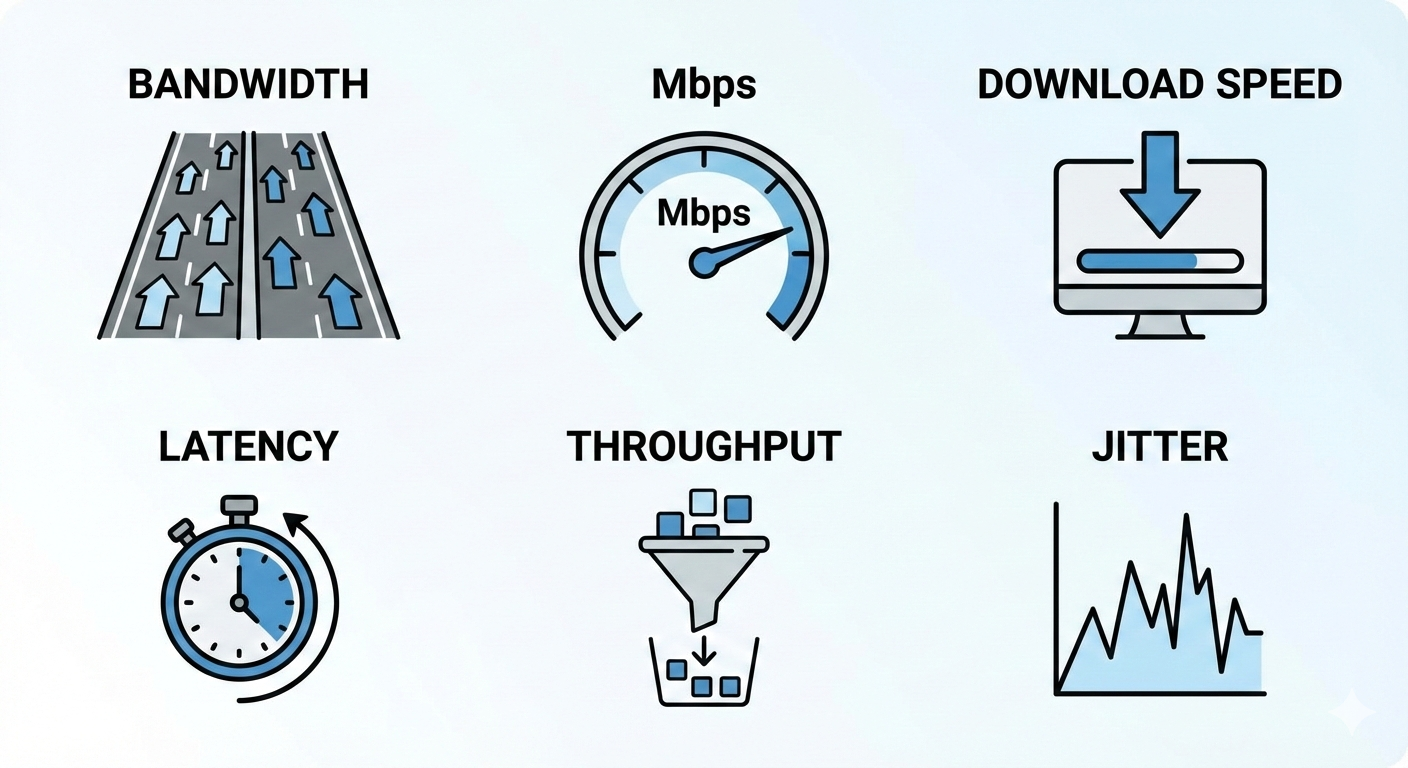
When shopping for internet service or troubleshooting a slow connection, terms like Mbps, bandwidth, and latency are often thrown around interchangeably. But they don’t all mean the same thing—and understanding the difference can help you choose the right plan and improve your real-world internet experience.
Let’s break down the key factors that define how “fast” your internet actually feels.
1. Capacity vs. Speed: Bandwidth and Mbps
While many people refer to bandwidth as speed, it’s more accurate to think of bandwidth as capacity. Bandwidth represents the maximum amount of data your internet connection can carry at one time.
Imagine your internet connection as a water pipe:
- A wider pipe can carry more water at once (higher bandwidth)
- It doesn’t necessarily mean the water moves faster—just that more can flow simultaneously
This is why bandwidth matters so much in households with multiple devices streaming, gaming, and browsing at the same time.
Mbps vs. Gbps
Internet capacity is measured in:
- Mbps (Megabits per second): Millions of bits per second, common for most home connections
- Gbps (Gigabits per second): Thousands of Mbps, usually seen in high-speed fiber plans
The “B” Matters
A common source of confusion is the difference between megabits (Mb) and megabytes (MB):
- Internet speeds are measured in megabits (Mb)
- File sizes are shown in megabytes (MB)
Since 1 byte = 8 bits, a 100 Mbps connection will download files at roughly 12.5 MB per second under ideal conditions.
2. Directional Speeds: Download vs. Upload
Internet traffic moves in two directions, and each plays a different role in your daily usage.
Download Speed
Download speed measures how quickly data travels from the internet to your device. This affects:
- Streaming movies and music
- Loading websites
- Downloading apps and files
- Scrolling social media
Most users typically experience 70% to 90% of the advertised download speed, depending on network conditions.
Upload Speed
Upload speed measures how quickly data is sent from your device to the internet. This is especially important for:
- Video calls (Zoom, Teams, FaceTime)
- Online gaming
- Posting photos or videos
- Cloud backups
Many consumer internet plans offer much lower upload speeds than download speeds, which can cause lag during video calls or large file uploads.
3. Real-World Performance: Throughput
Bandwidth is the theoretical maximum. Throughput is what you actually experience.
Throughput measures the amount of data successfully transferred in real-world conditions and is often lower than advertised speeds due to:
- Wi-Fi interference
- Network congestion
- Router or modem limitations
- Distance from the router
For example, if you pay for a 100 Mbps plan but your download tops out at 70 Mbps, your throughput is 70 Mbps.
4. Responsiveness: Latency and Jitter
A fast connection doesn’t always feel fast. Responsiveness plays a huge role—especially for real-time activities.
Latency (Ping)
Latency is the time it takes for data to travel from your device to a server and back, measured in milliseconds (ms).
Low latency is critical for:
- Online gaming
- Video conferencing
- Live streaming
Even with high download speeds, high latency can make your connection feel slow or “laggy.”
Jitter
Jitter measures how consistent your latency is over time. While latency is the delay itself, jitter is the variation in that delay.
High jitter can cause:
- Choppy or robotic audio
- Frozen video frames
- Unstable online gaming performance
Summary Table: Internet Speed Terms Explained
| Term | What It Measures | Why It Matters |
|---|---|---|
| Bandwidth | Maximum data capacity | Determines how many devices can be used at once |
| Download Speed | Data coming to you | Affects streaming, browsing, and downloads |
| Upload Speed | Data sent from you | Essential for video calls and cloud uploads |
| Throughput | Real-world speed | The actual speed you experience |
| Latency | Delay / round-trip time | Impacts responsiveness and real-time use |
| Jitter | Consistency of delay | Prevents choppy audio and video |
Final Thoughts
When evaluating your internet connection, don’t focus on Mbps alone. A truly great internet experience depends on the balance between bandwidth, throughput, latency, and jitter. Understanding these terms helps you make smarter decisions—whether you’re upgrading your plan, optimizing your home network, or troubleshooting performance issues.